
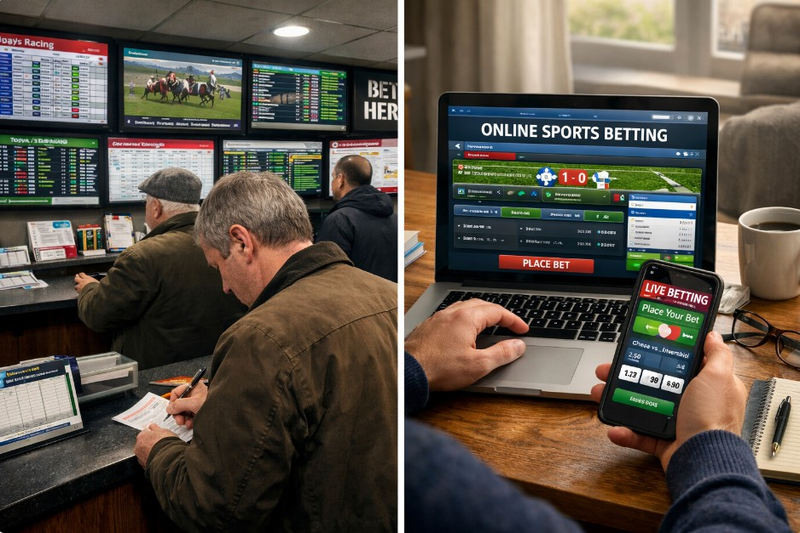
Online betting and betting in a bookmaker’s shop are closer than they’ve ever been. In the UK, you can place the same basic bets either way, often with the same brand, and sometimes even using the same account if you choose to link them.
But while the end result might look similar on paper, the experience, pricing, and practical realities can be very different. Those differences are what actually shape how and why people choose one over the other.
This guide looks at where online betting and betting shops genuinely overlap, where they don’t, and why one option might suit your betting style better than the other.
What’s Essentially The Same
At the most basic level, the product doesn’t change. You’re still backing an outcome at a price, with the bookmaker building margin into the market. The mechanics of the bet are the same whether it’s placed on a phone or across a counter.
The core sports offering is also broadly similar. Football, horse racing, tennis, boxing, darts, rugby, cricket and golf are all widely available both online and in shops. If your betting revolves around mainstream sport, neither option locks you out.
Both online operators and betting shops also operate under UK gambling regulation. That affects things like payment methods, age checks, and how accounts or customers are managed, regardless of channel.
Where Differences Start To Matter

Odds And Pricing
Online betting often offers better prices, but it’s not automatic.
Online markets are highly competitive and update constantly. Lower operating costs and fast-moving price feeds often mean tighter odds, particularly on popular events where multiple bookmakers are fighting for business.
Horse racing is where this difference shows up most clearly. In betting shops, a lot of casual racing bets are still placed to Starting Price, often by default if no price is specified. Online, punters are far more likely to take early prices, fixed odds, or prices with concessions attached. That changes how races are bet, not just where the bet is placed. It also means price comparisons between online and shops can be less straightforward on racing than on football or other fixed-odds sports.
That doesn’t mean shops are always worse value. Shop prices don’t always mirror online prices exactly, and in some cases they update more slowly. That can work against you, but it can also work in your favour if you know what you’re looking at.
It’s also worth knowing that in some shops there can be more than one price depending on how the bet is placed, such as over the counter versus a terminal. That catches a lot of people out because they assume there’s only one “shop price”.
If price matters to you, the practical reality is simple: check both. Treat online and in-shop betting as two related but separate marketplaces.
Markets And Bet Types
This is where online clearly pulls ahead.
Online betting typically offers:
- far more leagues and competitions
- deeper menus for individual matches
- player and team prop markets
- bet builders on a wide range of events
- new bet formats rolled out first
Betting shops focus on what works for walk-in customers. That usually means big football coupons, televised events, and horse racing. For many punters that’s perfectly adequate, but if you like variety or more granular markets, online is the stronger option.
In-Play Betting

Online betting is built for in-play markets. Prices move constantly and you can place, cash out, and re-bet quickly.
That speed comes with friction. Bet delays, suspensions, and price changes between selection and confirmation are part of online in-play betting, particularly on football.
In shops, in-play betting tends to be simpler and slower. Markets are there, but not in the same volume or depth. Some punters prefer that because it removes the pressure to react to every moment of a match.
Opening Hours And Access
Online betting is available at any time. Betting shops aren’t. That sounds obvious, but it has real-world implications. Shops operate within fixed hours, which naturally limits when bets can be placed. Online betting removes that restriction entirely.
Some people see that as pure convenience, others see the physical opening hours of shops as part of the appeal.
Getting Money On And Getting Paid

Shops remain the simplest option if you prefer cash. You walk in, place the bet, and leave with a slip. If it wins, you’re usually paid out directly.
Settlement is also different. Online bets are usually settled automatically and almost instantly once a market is resulted. In shops, settlement depends on staff and queues, and while it’s usually straightforward, it can take longer. The flip side is that shops add a human layer, which can sometimes be more flexible if something unusual crops up.
It’s also worth noting that cash betting in shops can be anonymous, while online betting is always account-based and tied to your identity.
Online betting offers far more flexibility in how you deposit and withdraw, but everything runs through an account. That means convenience, records, and history, but also checks, processes, and occasional delays.
This leads on to another related practical difference – record-keeping. Online betting automatically builds a full history of bets, stakes, odds, and results. In shops, unless you’re using a linked card or tracking things yourself, there’s no ongoing record once the slip is gone. For people who like to review what they’ve actually been betting on over time, that’s a meaningful difference.
One important point that applies to both: credit cards can’t be used for gambling with UK-licensed bookmakers, whether online or in shops.
Linking Online And In-Shop Betting
This is an area many comparisons miss entirely.
Some high-street bookmakers allow you to link your online and retail betting through a card system. Coral’s Connect card is the most obvious example, designed to tie online accounts and shop activity together. Ladbrokes has also promoted linked activity through its loyalty card system.
In practical terms, linking can:
- keep betting activity under one account
- make it easier to move between online and shop betting
- avoid being treated as two completely separate customers
It’s useful if you genuinely use both channels, but it’s not essential. Plenty of people still prefer to keep online and shop betting entirely separate.
Promotions And Offers

Online betting usually has the edge when it comes to promotions.
Most welcome offers are online-only, and ongoing promotions are easier to deliver digitally. Odds boosts, bet credits, opt-ins, and personalised offers are all far more common online.
Shops do run promotions, particularly around major horse racing meetings and big football events, but they’re usually more limited in scope.
The key thing to remember is that promotions are part of the bookmaker’s pricing strategy. They can be useful, but only if they align with bets you’d already planned to place.
Limits And Restrictions
Online betting is heavily automated. Stakes, patterns, and results are monitored constantly, and decisions about limits or offers are often triggered by systems rather than people. That’s why online restrictions can feel sudden or unexplained.
In betting shops, limits still exist, but they’re applied more situationally and face-to-face. It’s not that shops are restriction-free, but the process tends to feel more personal and less opaque.
This difference is one reason some punters like to keep both options available.
The Shop Experience
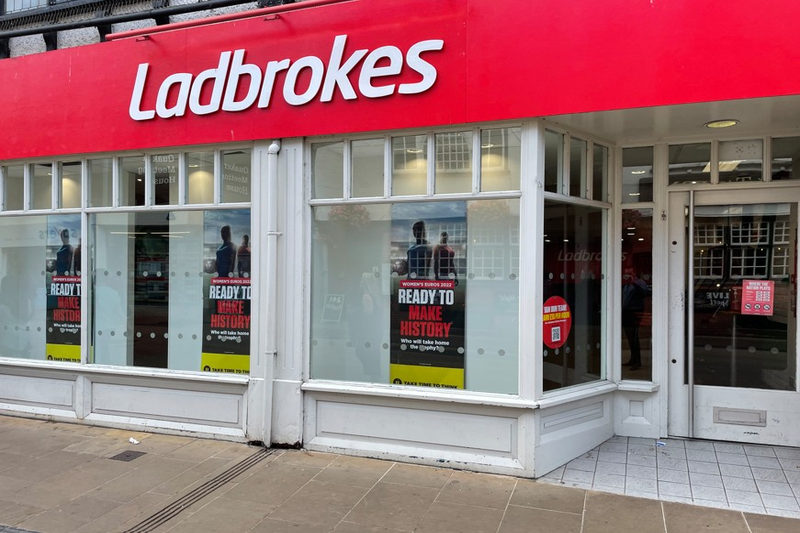
The biggest difference between online betting and betting shops isn’t technical, it’s environmental.
A shop is a physical place with a clear start and end point. You go in, place a bet, and leave. For many people, that structure is part of the appeal. Betting feels like an activity rather than something that sits in your pocket all day.
The atmosphere can also matter. For horse racing or major sporting events, the social side is part of the experience in a way online betting can’t replicate.
At the same time, shops aren’t for everyone. Being surrounded by screens and constant markets suits some people and puts others off. This is less about features and more about personal preference.
Gaming Machines In Shops
One practical difference worth mentioning is that betting shops may also contain gaming machines.
The maximum stake on B2 machines was reduced to £2 per spin in 2019, but their presence still changes the shop environment compared to betting online, where sports betting is the sole focus.
For some people it’s irrelevant. For others it’s part of why they prefer online betting.
Responsible Gambling: How The Systems Differ

Online betting and betting shops use different self-exclusion systems.
Online gambling in Great Britain is covered by GAMSTOP, which allows you to self-exclude from participating online operators for a set period. Betting shops use MOSES, which applies to physical premises within a chosen area.
The important practical point is that the two systems are separate. Excluding from online betting does not automatically exclude you from shops, and vice versa.
If you use both channels and ever decide to self-exclude, you need to be aware of that distinction.
Which Option Makes More Sense?
Online betting suits people who want convenience, market depth, and the ability to research and compare prices quickly. It’s efficient, flexible, and easy to track.
Betting shops suit people who prefer betting to be more deliberate and contained, with cash stakes and a physical separation from everyday life.
Many punters end up using both, but the key is doing so intentionally:
- online for range, research, and planned bets
- shops for the occasional cash bet or social day
Neither option is inherently better. The better choice is the one that fits how you actually bet, not how betting looks on paper.