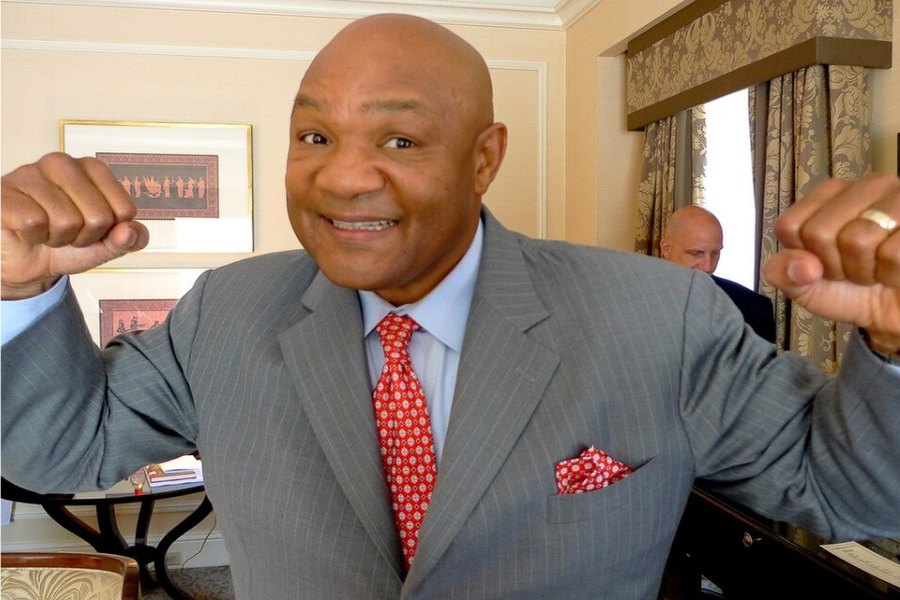
George Foreman, a name synonymous with boxing excellence and… grilled meat, has sadly passed away at the age of 76.
I’m just old enough to have placed some of my early bets on his legendary fights, so I feel compelled to reflect on the extraordinary life and career of this remarkable athlete.
Foreman’s journey from a troubled youth to a two-time world heavyweight champion is a testament to his resilience, determination, and charisma.
Early Life and Struggles
George Edward Foreman was born on January 10, 1949, in Marshall, Texas. Growing up in Houston’s challenging Fifth Ward, he faced numerous obstacles that could have derailed his future. By the age of 15, he had dropped out of school and found himself entangled in petty crime. However, everything changed when he discovered boxing at the age of 16.
Joining the Job Corps, a government initiative aimed at helping young people learn trades, Foreman found his calling. He quickly began to excel in boxing, showcasing his natural power and determination. His journey through the amateur ranks culminated in a gold medal victory at the 1968 Olympics in Mexico City, where he stopped Soviet fighter Jonas Čepulis in the second round. This victory marked the beginning of his ascent in the world of boxing.
Professional Career
Foreman’s professional career commenced in 1969, and he quickly established himself as a formidable force in the heavyweight division. Known for his ferocious punching power, he bulldozed through opponents, earning a reputation as a knockout artist. His rise culminated in a title fight against the undefeated champion Joe Frazier in 1973.
In a stunning upset, Foreman knocked Frazier down six times in just two rounds, securing the heavyweight title. The iconic call of commentator Howard Cosell, “Down goes Frazier! Down goes Frazier!” still resonates with boxing fans today. This victory marked a significant milestone in Foreman’s career, solidifying his status as a top contender in the sport.
The Rumble in the Jungle
Foreman’s most famous bout came in 1974 when he faced the legendary Muhammad Ali in the “Rumble in the Jungle.” The event took place in Kinshasa, Zaire, and was highly anticipated by boxing enthusiasts worldwide. Many expected Foreman to overpower Ali, given his recent dominance in the ring.
However, in a masterclass of strategy, Ali employed his now-famous “rope-a-dope” technique, absorbing Foreman’s early onslaught and allowing him to tire himself out. In the eighth round, Ali delivered a decisive blow, knocking Foreman out and leaving the boxing world in shock. This defeat was a pivotal moment in Foreman’s life, leading him to question his identity and purpose.
A Remarkable Comeback
After a brief hiatus from boxing, Foreman experienced a life-changing religious awakening, which led him to become an ordained minister. For a decade, he stepped away from the sport, focusing on preaching and working with troubled youths. However, in 1987, at the age of 38, he made a stunning return to the ring, surprising fans and critics alike.
Many believed Foreman would be a mere sideshow, but he proved everyone wrong. He embarked on an incredible winning streak, securing 24 consecutive victories, including 23 knockouts. This resurgence culminated in a title shot against the undisputed champion Evander Holyfield in 1991. Although he lost on points, Foreman’s performance earned him widespread respect for his tenacity and heart.
Historic Title Win
In November 1994, at the age of 45, Foreman faced reigning WBA and IBF champion Michael Moorer in Las Vegas. The bout was seen as a test of endurance and skill, with many believing that Foreman’s age would be a disadvantage. However, he defied expectations once again.
After being outboxed for most of the fight, Foreman landed a powerful right hand in the tenth round that knocked Moorer out cold. This victory made him the oldest heavyweight champion in history, a remarkable feat that solidified his legacy in the sport. As he knelt in prayer, the arena erupted in applause, celebrating a moment of redemption that resonated with fans around the world.
The George Foreman Grill
While Foreman’s boxing career was legendary, his impact extended far beyond the ring. He became a household name as the face of the George Foreman Grill, an electric grill that revolutionised cooking. Launched in 1994, the grill became a massive success, selling over 100 million units worldwide.

Foreman’s affable personality and enthusiastic promotion of the product turned it into a staple in kitchens across the globe. Although the exact earnings from this venture are not public, it is reported that he received $138 million from the manufacturer Salton for the rights to his name, along with a lucrative share of profits that once netted him an estimated $4.5 million per month.
Personal Life and Family
Foreman’s personal life was as colourful as his boxing career. He was married five times, with his most recent marriage to Mary Joan Martelly in 1985. Together, they had a large family, with Foreman fathering 12 children, including five sons all named George. His unique approach to parenting saw him instil a sense of unity among his children, famously stating, “If one of us goes up, then we all go up together, and if one goes down, we all go down together!”
One of his daughters, Freeda Foreman, followed in his footsteps and pursued a career in boxing. She compiled a professional record of 5-1 before retiring in 2001. Tragically, she passed away in 2019 at the age of 42, leaving a lasting impact on her father and family.
Final Years and Death
In his later years, Foreman remained active in various ventures, including motivational speaking and philanthropy. He often reflected on his journey, sharing insights from his life experiences and the lessons he learned along the way. His ability to connect with people from all walks of life endeared him to fans and followers alike.
As a boxing fan, I often look back on the matches I watched and the bets I placed on Foreman’s fights with nostalgia. His larger-than-life presence in the ring and his remarkable comebacks are etched in my memory. You could get good odds on Big George due to his age, but you always knew he was worth a few quid because he had a habit of surprising people.
Even his death was a surprise. He wasn’t ill. He wasn’t even that old really – 76 isn’t ancient by any means. But what a life. What a legacy. What a boxer.