
I’ve always been a fan of football, but never really a player. My son plays though, so after buying endless pairs I have learned a lot about football boots.
One of the most crucial aspects of football boots is the studs. But how many studs should a football boot have? And how do you choose the right pair for different playing surfaces?
In this comprehensive guide, I’ll walk you through everything you need to know about football boot studs, from the various types to the ideal number for different conditions. Whether you’re a Sunday league warrior or an aspiring pro, this information will help you make an informed decision when selecting your next pair of boots.
What Football Boot Studs Are For
Football boot studs, also known as cleats or spikes, are the small protrusions on the sole of the boot that provide traction and stability on the playing surface. They come in various shapes, sizes, and materials, each designed for specific ground conditions.
The number of studs on a football boot can vary significantly depending on the type of boot and its intended use. Generally, you’ll find anywhere from 6 to 15 studs on a typical football boot. However, some specialised boots may have even more.
The configuration and number of studs play a crucial role in determining how well the boot performs on different surfaces.
Firm Ground (FG) Boots
Firm ground boots are the most common type of football boots you’ll encounter. They’re designed for use on natural grass pitches that are well-maintained and relatively dry. These boots typically have between 10 and 14 studs.
The studs on FG boots are usually made of moulded plastic or hard rubber. They’re arranged in a pattern that provides optimal traction on firm natural grass. You’ll often see a combination of bladed and conical studs, with longer studs at the heel and forefoot for stability and shorter studs in the midfoot for quick turns.
FG boots are incredibly versatile and can be used on most natural grass pitches, as well as some artificial surfaces. However, they’re not ideal for very soft or muddy conditions.
Soft Ground (SG) Boots
Soft ground boots are designed for use on wet, muddy, or soft natural grass pitches. These boots typically have fewer studs than FG boots, usually between 6 and 8.
The studs on SG boots are longer and often made of metal, although some modern designs use hard plastic. The longer studs provide better penetration into soft ground, offering superior traction in slippery conditions.
Traditional SG boots have six studs – four under the forefoot and two at the heel. However, many modern SG boots feature a hybrid design with additional moulded studs for improved stability.
SG boots are essential for playing in typical British winter conditions. However, they’re not suitable for use on firm ground or artificial surfaces, as the long studs can cause discomfort and potentially lead to injuries.
Artificial Grass (AG) Boots
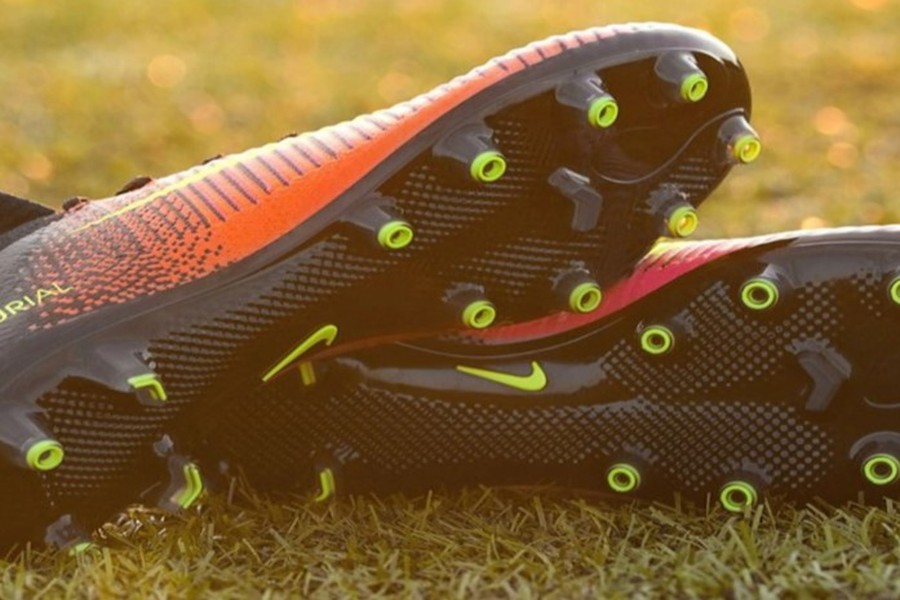
With the increasing popularity of artificial grass pitches, many boot manufacturers now offer specialised AG boots. These boots typically have a higher number of studs compared to FG or SG boots, often ranging from 20 to 30 or more.
The studs on AG boots are shorter than those on FG boots. They’re designed to provide optimal traction on artificial surfaces without getting caught in the turf, which can lead to injuries.
AG boots offer excellent performance on 3G and 4G artificial pitches. They provide a good balance of traction and comfort, reducing the strain on your feet and legs that can occur when using FG boots on artificial surfaces.
Turf (TF) Boots
Turf boots, also known as astro trainers, are designed for use on older artificial surfaces, hard ground, or indoor pitches. Instead of traditional studs, these boots have a sole covered in numerous small rubber nubs.
The number of these rubber nubs can be in the hundreds, providing excellent traction on hard surfaces without the risk of damage associated with longer studs.
My son uses turf boots for training sessions on hard ground or for casual games on older artificial pitches. They’re also great for indoor football, providing good grip without marking the floor.
Indoor (IN) Boots

Indoor boots are designed for use on smooth, flat indoor surfaces like sports halls or futsal courts. These boots don’t have traditional studs at all. Instead, they feature a flat, grippy rubber sole similar to that of a tennis shoe or basketball trainer.
While they don’t have studs in the traditional sense, the soles of indoor boots often feature patterns or textures designed to provide traction on smooth surfaces.
Indoor boots are essential for futsal or indoor five-a-side games – some venues can be very picky about what you wear on their expensive floor. They offer excellent control and quick movement on smooth surfaces where traditional studs would be impractical.
Multi-Ground (MG) Boots
Multi-ground boots are a relatively new innovation designed to provide versatility across different playing surfaces. These boots typically have a stud configuration that’s a hybrid between FG and AG designs.
MG boots usually have between 10 and 16 studs, often in a mix of shapes and sizes. The idea is to provide adequate traction on both natural grass and artificial surfaces.
MG boots can be a good option if you regularly play on a variety of surfaces and don’t want to invest in multiple pairs of boots. However, they may not provide optimal performance on any single surface type.
Choosing the Right Boot for Your Surface
Selecting the right boot for your playing surface is crucial for both performance and safety. Here’s a quick guide to help you choose:
- Natural grass (firm): FG boots
- Natural grass (soft/muddy): SG boots
- Modern artificial grass (3G/4G): AG boots
- Older artificial turf/hard ground: TF boots
- Indoor smooth surfaces: IN boots
- Multiple surface types: MG boots
Remember, using the wrong type of boot for a surface can not only hinder your performance but also increase your risk of injury.
The Impact of Stud Configuration on Performance

The number and arrangement of studs on a football boot can significantly impact your performance on the pitch. Here are a few key considerations:
- Traction: More studs generally provide better traction, but this can vary depending on the surface.
- Stability: A well-designed stud configuration can improve stability, especially during quick turns and changes of direction.
- Pressure distribution: The arrangement of studs affects how pressure is distributed across your foot, which can impact comfort and potentially reduce the risk of injury.
- Weight: More studs typically mean more weight, which could affect your speed and agility.
Finding the right balance between these factors is key to choosing a boot that enhances your performance.
Conclusion
Choosing the right football boots with the appropriate number and type of studs can significantly enhance your performance and enjoyment of the game. Remember, there’s no one-size-fits-all solution – the best boot for you will depend on your playing style, the surfaces you play on, and your personal preferences.
Whether you’re looking for the perfect pair for your Sunday league matches or trying to understand why professional players change their boots at half-time, I hope this guide has helped.